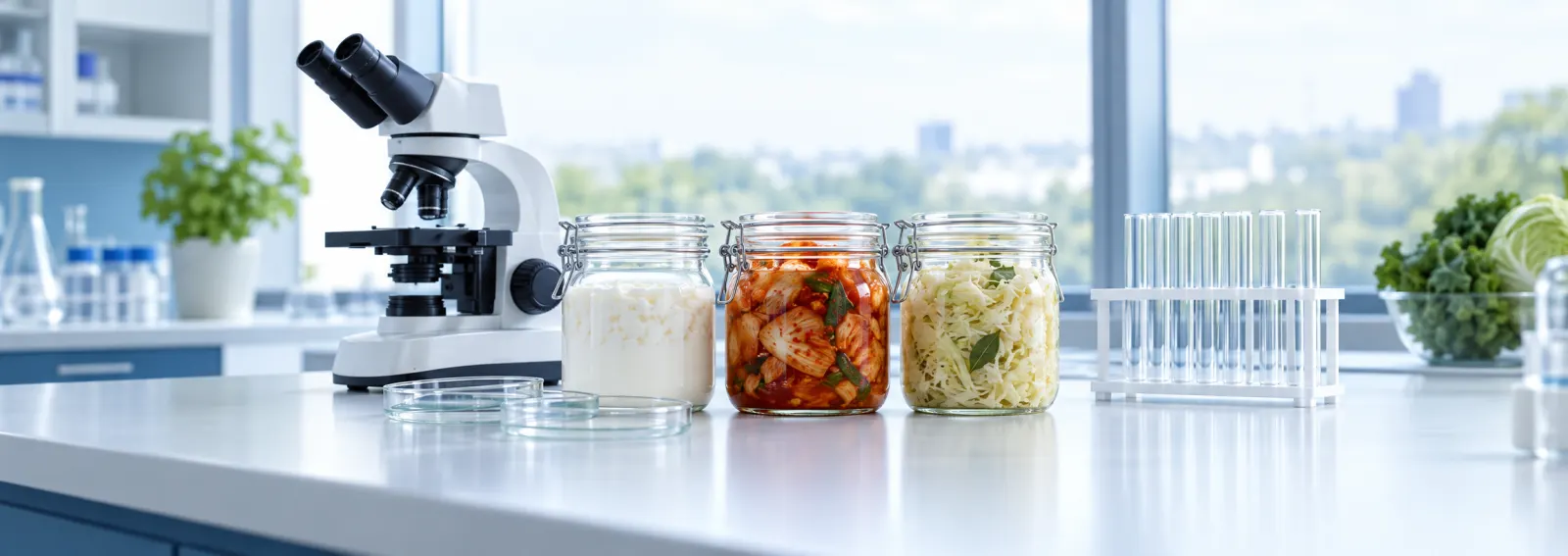
A microscope, jars of kefir, kimchi, and sauerkraut, petri dishes, and a rack of test tubes on a sunlit lab bench
All articles

Research · October 2026

Gut research roundup: October 2026

Six new studies this month: stool transplants for IBS, antibiotics and later IBS, fiber on a low FODMAP diet, habits that lower GERD risk, early-onset colorectal cancer, and fiber bread for older adults.

Stool transplants for IBS: still uncertain

A fecal microbiota transplant (FMT) moves gut bacteria from a healthy donor into someone else's gut. Researchers at McMaster University pooled 13 trials covering 693 people with IBS. Across everyone who started treatment, FMT did not clearly beat a placebo at 12 weeks. Among people who completed treatment, it did help some, but the authors rate the overall evidence as very low certainty.

FMT is not a standard IBS treatment. If you are curious about it, talk to your doctor.

Study type: a review of 13 randomized trials (693 people). Source: Gastroenterology, October 2026

Antibiotics during a stomach bug linked to later IBS

A team at the University of Bologna combined 31 studies covering more than 420,000 people. People who took antibiotics were more likely to be diagnosed with IBS later, and the link was strongest when the antibiotics were taken for a gut infection: about 1.7 times the risk. The studies varied a lot, so the authors call for better research before drawing firm conclusions.

This shows a link, not proof that antibiotics cause IBS, and antibiotics are often necessary. Do not stop a prescription without talking to your doctor. For more on IBS, see our guide to IBS trigger foods.

Study type: a review of 31 observational studies. Source: The American Journal of Gastroenterology, October 2026

Adding fiber back during a low FODMAP diet

A low FODMAP diet often eases IBS symptoms but can cut the fiber gut bacteria feed on. In a small trial at Edith Cowan University in Australia, 26 adults with IBS on a low FODMAP diet took either a fiber blend or a placebo for three weeks. The fiber group ate more fiber, their gut bacteria shifted, and they reported less anxiety about gut symptoms, without their symptoms getting worse. The blend is a product owned by the university that ran the trial.

It was a small, short study. Our guide to IBS trigger foods explains how the low FODMAP approach works.

Study type: a randomized, placebo-controlled trial of 26 people. Source: European Journal of Nutrition, September 2026

Healthy habits and a lower risk of GERD

Researchers followed more than 300,000 adults in the UK Biobank for about 13 years. They scored seven habits: not smoking, good sleep, a moderate body weight, regular exercise, moderate alcohol, a healthy diet, and moderate tea or coffee. People with five or more of these habits were about 37% less likely to develop GERD than people with fewer than two. Every habit except moderate drinking was linked to lower risk on its own.

This kind of study shows a link, not cause and effect. For the foods and habits most often tied to reflux, see our guide to GERD trigger foods.

Study type: a study following 306,543 adults over time. Source: PLOS ONE, October 2026

Faster biological aging and colorectal cancer under 50

Colorectal cancer is rising in adults under 50. A Korean study followed nearly 200,000 adults under 50 for about eight years and estimated each person's biological age from nine routine blood tests. People whose biological age ran ahead of their real age had about twice the risk of early-onset colorectal cancer. Cases were still rare: 127 in the whole group. The authors suggest measures like this could one day help decide who is screened earlier.

See a doctor about blood in your stool, a lasting change in bowel habits, or unexplained weight loss, at any age. Ask your doctor when screening makes sense for you.

Study type: a study following 198,491 adults over time. Source: Clinical Gastroenterology and Hepatology, October 2026

Fiber-enriched bread in older adults: mostly no change

In an Australian trial, 53 adults aged 60 to 80 who ate little fiber had a bread roll each day for 12 weeks. Half got a roll with 10 grams of added prebiotic fiber, half a matching plain roll. Memory, most mood measures, gut symptoms, and inflammation did not improve with the fiber roll. One mood measure, hostility, fell in the fiber group. The researchers say longer and larger studies are needed.

A useful reminder that one added food rarely changes much on its own, and that early microbiome findings often do not hold up.

Study type: a randomized, placebo-controlled trial of 53 people. Source: The Journal of Nutrition, Health and Aging, October 2026

How we pick and read studies

Each month the agni team looks through new studies in medical journals on the gut, digestion, and nutrition. We link every original study, say what kind of study it was, and favor research in people over research in animals. One study rarely settles a question, so we report what was found and how strong the evidence is.

This roundup is general information, not medical advice. Talk to your doctor before changing a treatment.

What does your gut respond to?

Built with dietitians and gastroenterologists

Studies describe averages. agni finds what affects your gut by connecting what you log with how you feel, and builds a report you can bring to your doctor.

Join the waitlist

The first 100 to confirm get a year free.